Santa Lucia Farm
The Disappearance of Josef MengeleSanta Lucia Farm was both a refuge and a carefully watched enclosure in Josef Mengele’s flight through South America. Set above the plain near Serra Negra, it offered natural barriers and distance from public life; within it, Mengele relied on concealment, a lookout tower, and the assistance of the Stammers and Gerhard. The farm made him feel safer than at his earlier hideouts, but not secure enough to stop expecting betrayal or capture.
Setting and Isolation
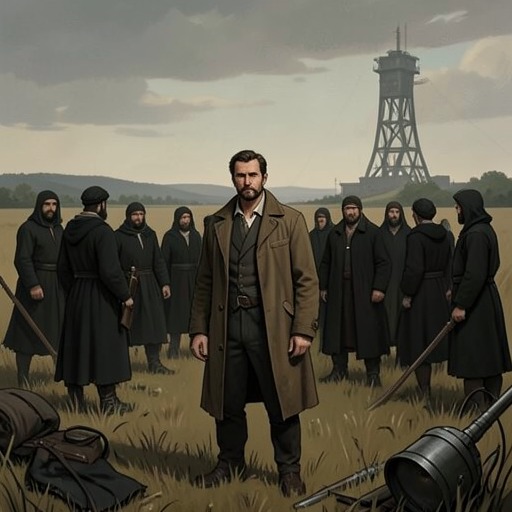
Serra Negra, the Brazilian spa town around the farm, had been founded by Italian settlers. The surrounding landscape had changed from yellowed savannah to jungle: wooded hills concealed clear spring water, while the farm stood above the plain like a fortress. Behind its coffee plantation, a rocky outcrop and dense forest formed a natural barrier. This terrain mattered practically to Mengele, who regarded the farm as a more secure refuge than any of his other hiding places since leaving Argentina.
The protection of the landscape did not relieve his sense of isolation. On a stormy night at the new farm, he brooded over how far he had fallen and how thoroughly he had disappeared from public life. He saw his survival as resting on two precarious connections: the Hungarian family sheltering him, whom he believed might eventually betray him, and Gerhard, whom he regarded with contempt but still depended upon. By dawn he had collapsed onto his bed. The episode makes the farm’s central contradiction plain: its distance and concealment offered shelter, while his dependence on a few people made that shelter feel liable to fail at any moment.
Refuge and Concealment
After Eichmann’s hanging, Mengele felt comparatively safe at the farm, but his safety depended on remaining unseen. He did not leave the property and saw no one other than Gerhard, who brought him newspapers, books, laxative suppositories, and, occasionally, classical music records. Before the Stammers could receive even infrequent visitors—including neighbours, wealthy Germans, and Italian colonists—Mengele questioned them about who the visitors were, where they came from, and how long they had been known. Reassurances did not persuade him to appear.
He kept out of sight when friends came to visit on Saturdays. On the farm he was presented as “tio Pedro,” or Uncle Peter, an eccentric old Swiss man who must not be photographed or discussed outside the property. Mengele also asked the Stammers to hire a janitor, with his family expected to pay. Such arrangements extended concealment beyond his own movements: visitors received a cover story, and even the possibility of ordinary conversation about the resident was treated as a risk.
Defences and Daily Watchfulness
Mengele’s precautions turned the farm into a place of continuous surveillance. He lived among about fifteen stray dogs he had trained; they accompanied him when he went into the jungle, with the dog Cigano staying close at his heels. For a clearer view of the approaches, he arranged for a farm labourer to build a lookout tower, claiming that it was needed for bird-watching. When the original wooden structure was replaced because of the risk of termites, the stone tower became an imposing addition to the farm.
From the tower, Mengele watched the small country road winding through the hills and the purple dirt track leading up to the property. Wearing a beekeeper’s outfit and carrying Zeiss binoculars, he spent hours scanning the approaches; in clear weather, his view reached as far as Lindonia, five miles away. He climbed the tower at twilight as well as during the day, keeping watch even as mosquitoes swarmed around him. The dogs, tower, clothing, and binoculars all served the same purpose: to turn the farm’s surrounding space into an early-warning system.
Illness and Dependence
The refuge also became the setting for an episode of illness that exposed Mengele’s dependence on the household. After his condition worsened, he remained in bed, delirious and barely eating. Gitta worried about the prospect of a war criminal dying in her home; Geza was away and could not help her. When she prepared to seek a doctor, Mengele regained enough strength to tell her to abandon the plan, but the fever returned on the sixth day.
Gitta continued to visit, air his room, bring soup and large bowls of tea, and apply cold compresses to his forehead. During this period she called him Peter, using the name that belonged to his concealed identity. The account also records a private sexual encounter between them while he was ill, without turning the farm into a place of lasting security or mutual trust. Her care met his immediate needs, but his larger position remained unchanged: he was hidden in another household, reliant on people whose presence could protect him and whose knowledge could also threaten his concealment. Santa Lucia Farm therefore functions in the narrative as more than a remote address. Its walls, paths, tower, and guarded rooms register the narrowing conditions of Mengele’s fugitive life, in which every precaution against exposure sharpened his dependence on others.